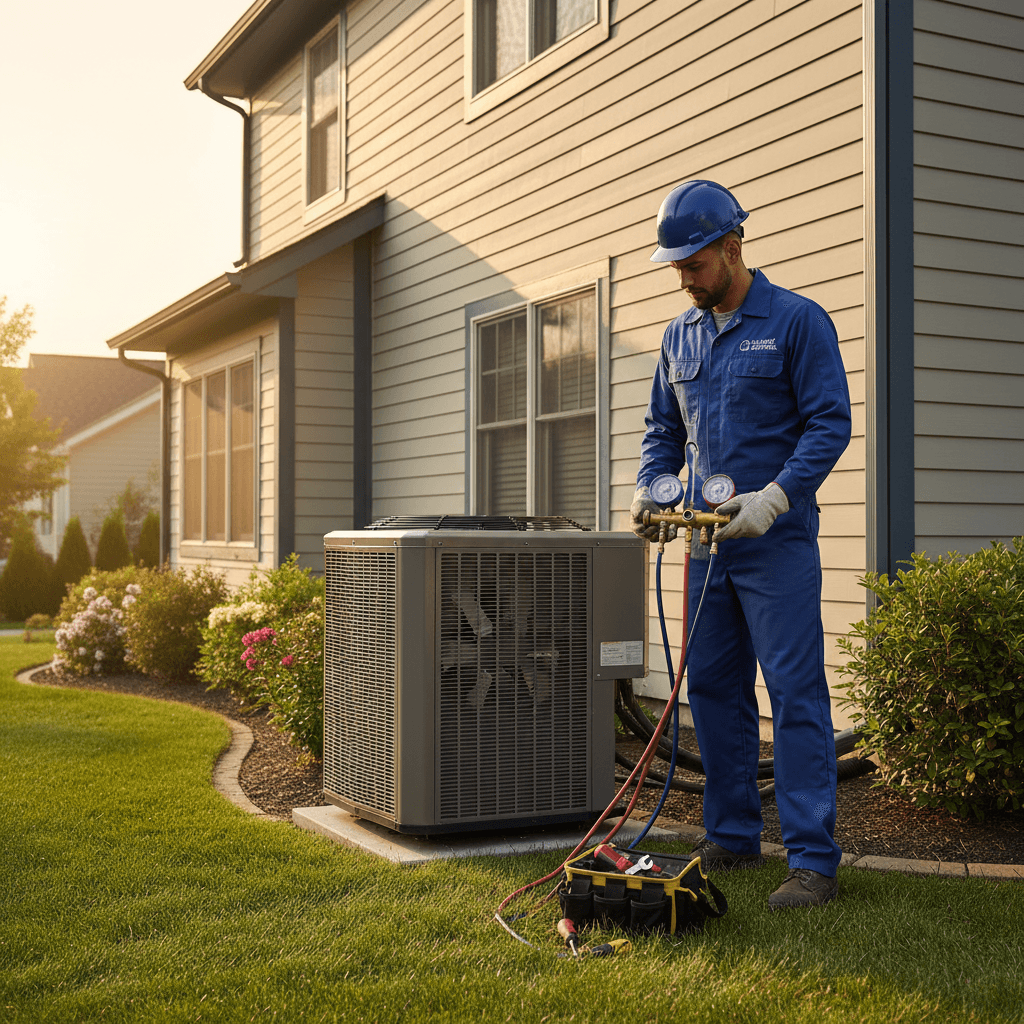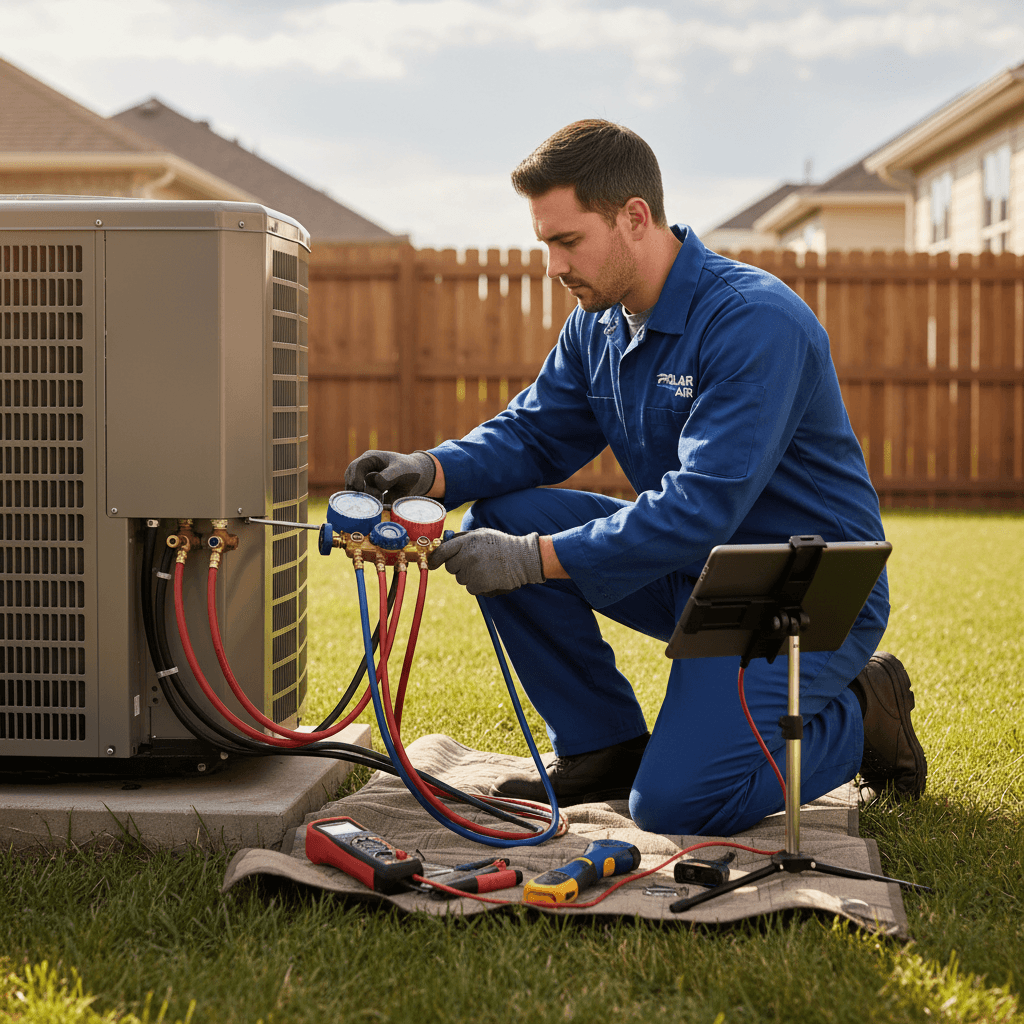
Homeowners should immediately turn off their units and switch on the fan if the system stops cooling, as this helps thaw frozen coils before calling for emergency HVAC repair Glendale CA. Local professional technicians offer 24/7 assistance to resolve common heatwave issues such as low refrigerant or electrical stress and restore home comfort quickly.
There is nothing more frustrating than arriving at your Glendale home during a triple digit heat wave only to find your air conditioning system has completely failed. As the indoor temperature rapidly climbs to match the sweltering conditions outside, the situation transitions from a minor annoyance to an urgent household crisis. Understanding how to navigate emergency HVAC repair in Glendale, CA, is essential for protecting your family and your property from the risks of extreme heat. This guide provides a comprehensive survival strategy for local homeowners. You will learn how to perform immediate troubleshooting to potentially avoid a service call, how to remain cool while waiting for a technician, and why local expertise is vital during peak demand periods. We will also explore the critical factors that influence repair costs and the industry standard 5000 Rule to help you make informed decisions.
Step 1: Immediate Troubleshooting Before You Call for Service
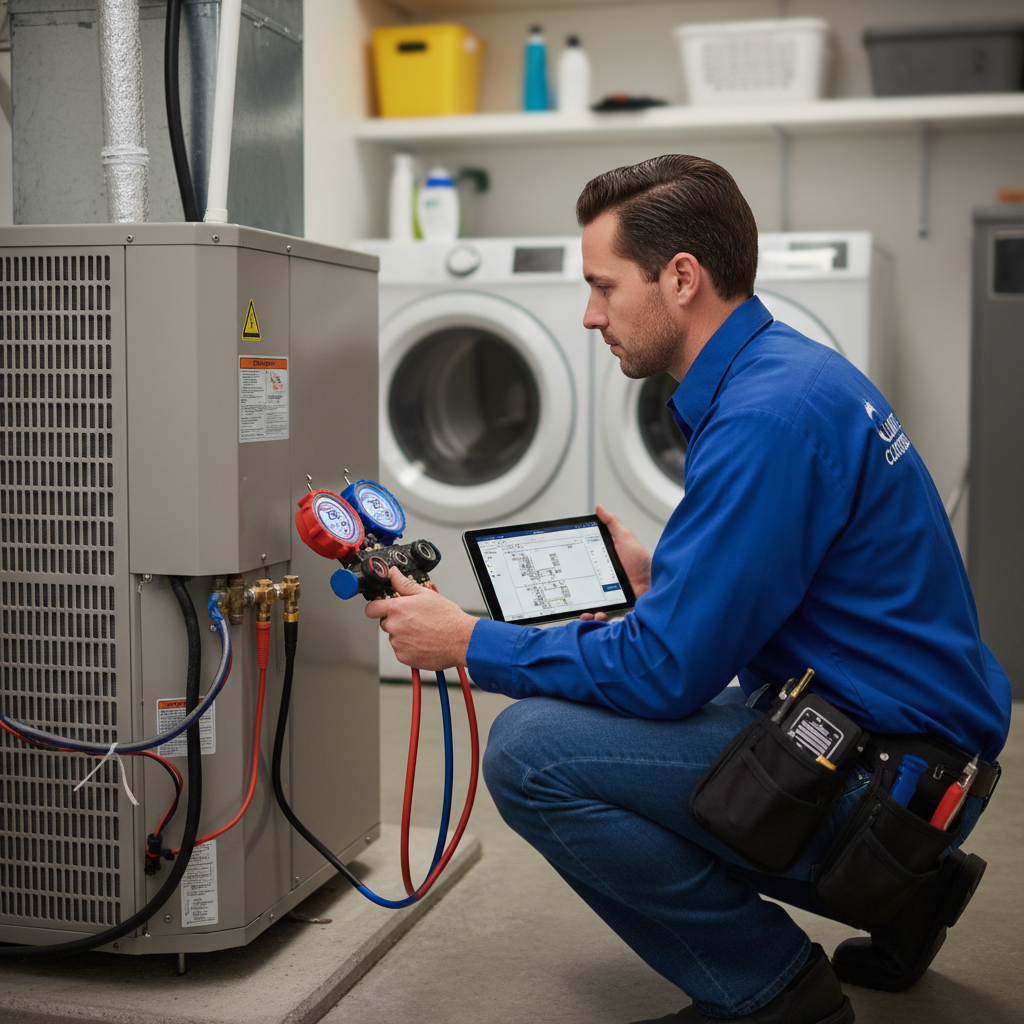
Before calling for professional AC repair in Glendale, CA, perform a few quick checks that could save you significant time and an unnecessary service fee. Many local cooling issues stem from simple power or airflow interruptions rather than mechanical failure.
Check the Circuit Breaker: During intense Glendale heatwaves, the local power grid faces massive demand. This strain can cause your home’s breaker to trip as the AC unit draws peak amperage to keep up. Locate your electrical panel and look for the switch labeled HVAC or Air Conditioner. If it has migrated to the middle position, flip it completely to 'off' and then back to 'on' to reset the connection.
Inspect Thermostat Batteries: A blank thermostat screen often means the batteries are dead, preventing the unit from sending a start signal to the condenser. Replace the batteries with fresh ones and wait three to five minutes for the system to cycle.
Examine the Air Filter: It is a common misconception that systems only freeze in winter. In reality, a clogged air filter in a 100-degree Glendale summer is a leading cause of frozen evaporator coils. When airflow is restricted, the refrigerant becomes too cold, turning condensation into ice. If you see ice on the copper lines or feel warm air blowing from the vents, turn the system to 'fan only' to begin the thawing process.
If these troubleshooting steps do not restore cooling, you likely have a more complex electrical or refrigerant issue that requires emergency HVAC repair Glendale CA. In these cases, it is best to contact our local team immediately to prevent further damage to the compressor.
What Qualifies as an HVAC Emergency in Glendale?
In Glendale, the distinction between a standard repair and a true emergency often depends on the speed of the temperature spike. While a slightly warmer house is a significant inconvenience, certain scenarios demand emergency HVAC repair Glendale CA to protect both your property and your health.
An emergency is defined primarily by safety risks. If the National Weather Service has issued a heat advisory and your system fails completely, the interior of your home can reach dangerous levels within two hours. This is especially critical in neighborhoods like Adams Hill or Rossmoyne. Many of the character homes in these areas were built with minimal insulation by modern standards, meaning they lose conditioned air rapidly and absorb heat through older roofing materials. For households with infants, the elderly, or residents with chronic health conditions, a non-functional AC in 100-degree weather is a medical hazard.
You should consider your situation an emergency if you encounter these specific red flags:
Electrical Odors: A smell resembling burning plastic or ozone suggests a failing capacitor, melted wiring, or a seized blower motor. This is a fire risk; shut the system off at the breaker immediately.
Hissing or Bubbling Sounds: These noises often indicate a high-pressure refrigerant leak. Beyond the system damage, escaping refrigerant is a chemical hazard that requires professional mitigation.
Total System Failure During a Heat Wave: When ambient temperatures exceed 95 degrees, the lack of airflow stops being a comfort issue and becomes a heat exhaustion risk.
If your unit is making loud metal-on-metal banging noises or simply will not kick on despite your initial troubleshooting, it is time to contact our local team. Delaying AC repair in Glendale, CA during peak summer months can lead to a complete compressor burnout, turning a manageable repair into an expensive full-system replacement.
How to Stay Cool While Waiting for Emergency HVAC Repair Glendale CA
Once you have scheduled emergency HVAC repair Glendale CA, your priority is stabilizing the indoor temperature while our technician is en route. The intense valley sun is your primary adversary; start by closing all south facing blinds and heavy curtains to block solar heat gain. This simple step prevents the greenhouse effect from rapidly cooking your living spaces.
Ensure your ceiling fans are rotating counter clockwise at high speed to create a wind chill effect on your skin. Because heat naturally rises, relocate your family and pets to the lowest level of your home. Tile or stone flooring on the ground floor often retains a cooler temperature than carpeted upstairs bedrooms. To keep the air from becoming heavy, limit internal heat production by avoiding the use of the oven, stove, or clothes dryer.
A practical pro tip for immediate relief is hanging a damp, cold sheet in front of a circulating floor fan. This mimics a basic evaporative cooler and can drop the immediate air temperature by several degrees. If the indoor heat becomes unbearable or exceeds safe levels for infants and seniors, Glendale provides designated cooling centers at the Glendale Central Library and the Pacific Community Center. If you have not yet secured a service window, contact our local team immediately to ensure the fastest possible response time.
Why Air Conditioners Fail During Southern California Heat Waves
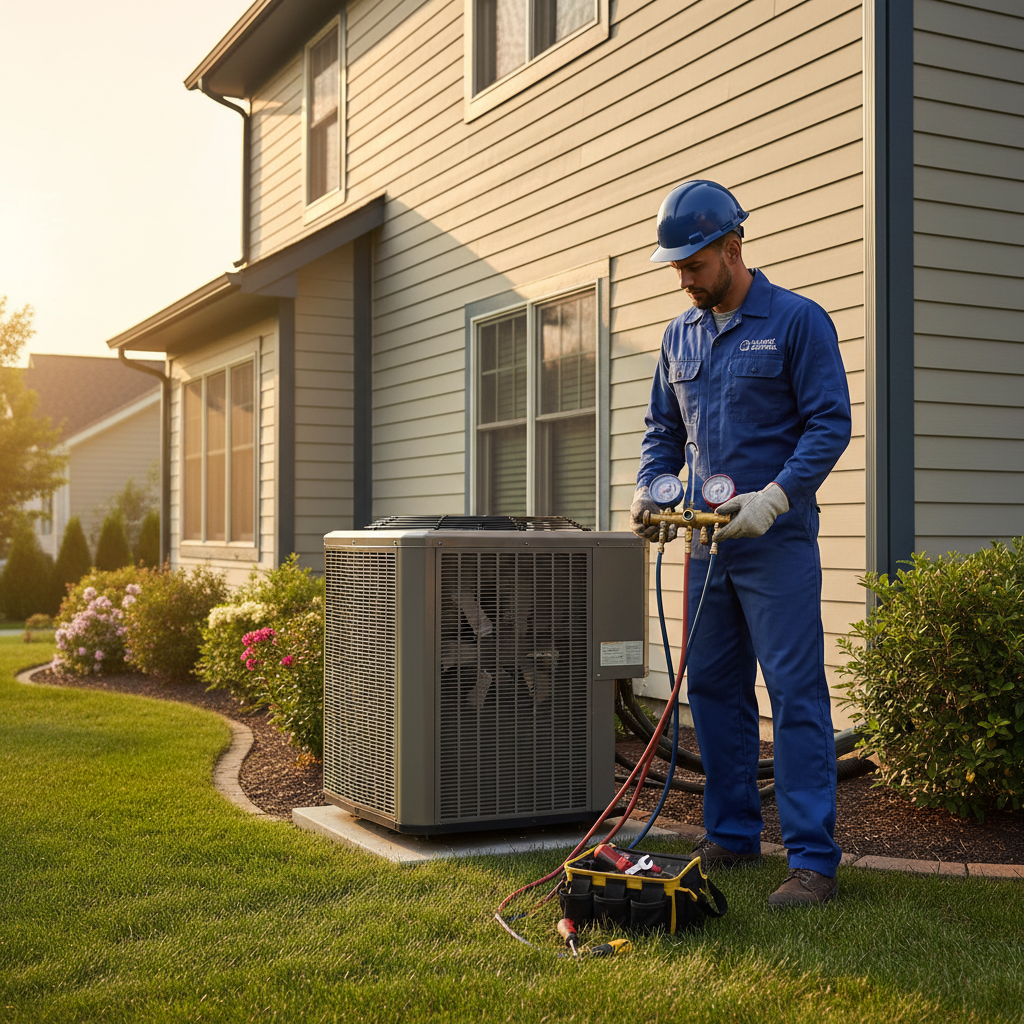
Understanding why your cooling system suddenly quit helps manage expectations during a record breaking heatwave. Most residential air conditioners are engineered to achieve approximately a 20 degree temperature differential between the outdoor air and the air inside your home. When a Glendale afternoon reaches 105 degrees, your system is essentially being pushed to maintain an indoor temperature of 85 degrees. If the thermostat is set to 72 degrees during these peak hours, the compressor is forced to run continuously without a cooling cycle. This lack of downtime leads to mechanical exhaustion and eventual system shutdown.
The outdoor condenser coil relies on a significant temperature gradient to dissipate the heat pulled from your home. When the ambient air surrounding the unit is already scorching, this heat exchange becomes remarkably inefficient. The system must operate at much higher internal pressures to move thermal energy, which places immense strain on the compressor. This explains why a unit that performed perfectly in May might require emergency HVAC repair Glendale CA once the July sun hits its peak.
Electrical stress also plays a major role during Southern California summers. As the local power grid faces massive demand, voltage fluctuations or brownouts can occur. Low voltage forces your AC motors to draw more current to compensate, generating internal heat that can easily fry a start capacitor or a blower motor. Additionally, refrigerant levels that were marginally low in 85 degree weather will reach a breaking point at 100 degrees. The system simply loses the ability to manage the heat load, leading to a total failure. This does not mean your unit is junk; it means it has been pushed beyond its engineered limits. If your system has entered a protective lockout or is blowing warm air, you should contact our local team to perform a professional diagnostic. We can determine if the issue is a simple component failure or a need for more extensive AC repair in Glendale, CA.
The Local Advantage: Why Glendale HVAC Repair Beats National Chains
When your home is reaching 90 degrees inside, you cannot afford to wait 48 hours for a technician dispatched from a regional hub in another county. National HVAC chains often rely on third party subcontractors during peak summer months to handle overflow, which can lead to inconsistent service quality and frustratingly long waitlists. These large franchises prioritize volume over individual neighborhood needs, often sending out technicians who are unfamiliar with the specific architectural challenges of Glendale homes.
Choosing a local specialist for emergency HVAC repair Glendale CA provides several distinct advantages:
Feature | Local Glendale Specialist | National Franchise |
|---|---|---|
Dispatch Location | Within Glendale city limits | Regional hub or out-of-state call center |
Technical Expertise | Familiar with local grid and housing stock | Generalized national training |
Response Times | Fast (technicians are already nearby) | Longer (dispatching from distant areas) |
Accountability | Community-based reputation | High-volume, impersonal service |
Our technicians are already in your neighborhood, which means they spend less time stuck in traffic on the 134 or the 2 and more time at your property. We understand the specific nuances of the local Glendale Water & Power grid, including how the area’s frequent brownouts impact sensitive start capacitors and control boards. Because we work extensively in neighborhoods like the Verdugo Woodlands and the Rossmoyne Historic District, we have direct experience with the specific equipment configurations found in both vintage homes and modern builds.
This local focus allows us to offer faster diagnostics and a more personal level of AC repair in Glendale, CA. We are not just service providers; we are members of the community dedicated to keeping our neighbors safe during extreme weather. To experience the difference that local expertise makes, contact our local team for immediate assistance.
Understanding Emergency HVAC Service Call Costs and the 5000 Rule
One of the most common concerns during a system breakdown is the financial impact of an after-hours visit. Transparency is essential for building trust, especially when you are already dealing with the stress of a triple-digit afternoon. Emergency service fees are a standard reality in the industry; these costs cover the specialized logistics required for immediate dispatch and the availability of expert technicians outside of standard business hours. At Glendale HVAC Repair, we focus on upfront pricing. You will receive a clear diagnostic and a flat-rate quote before any work begins, ensuring there are no hidden surprises on your final bill.
When we provide a quote for AC repair in Glendale, CA, we often help homeowners navigate the 5000 Rule. This is a practical formula used to determine if a repair is a wise investment or if you are simply pouring money into a failing system. To use it, multiply the age of the unit by the estimated cost of the repair. If the total exceeds 5,000, a replacement is usually the more economical long-term choice.
System Age (Years) | Repair Cost | 5000 Rule Total | Recommendation |
|---|---|---|---|
12 | $300 | 3,600 | Proceed with Repair |
12 | $600 | 7,200 | Consider Replacement |
8 | $500 | 4,000 | Proceed with Repair |
15 | $400 | 6,000 | Consider Replacement |
This calculation is particularly relevant for Glendale residents with older R-22 refrigerant systems, where parts and fluid costs have skyrocketed. If your repair falls on the wrong side of this rule, contact our local team to discuss modern, high-efficiency options that can better handle the local climate. Our goal with emergency HVAC repair Glendale CA is to provide the most sensible solution for your specific budget and cooling needs.
Staying cool during a Glendale heat wave is about more than just comfort; it is a matter of safety for your family. While basic troubleshooting can often resolve minor issues, some mechanical failures require a more specialized touch. If you want expert help to restore your home's climate quickly, our professional team is ready to assist. You can reach out for an Emergency Repair at any time. We are here to ensure your system runs efficiently when you need it most.